BHR Awarded the Flagship UK Contract for the International Franchise School of Rock.

We are proud to announce that we have been awarded the contract to deliver the first and flagship UK School of Rock, part of the world-renowned international franchise that operates over 450 music schools globally. This milestone project marks the brand’s debut on British soil—and we are honoured to play a central role in bringing their vision to life.
Project Overview
BHR was appointed to deliver the full fit-out of the first School of Rock music school in the United Kingdom, located within a prominent former bank building on York Street, Twickenham, close to the historic Eel Pie Island music district.
This landmark project marked a major milestone for both School of Rock’s UK expansion and BHR’s growing portfolio of specialist commercial fit-outs. The objective was to transform the existing building into a fully operational, performance-based music school while ensuring strict acoustic compliance due to residential apartments located above the premises.
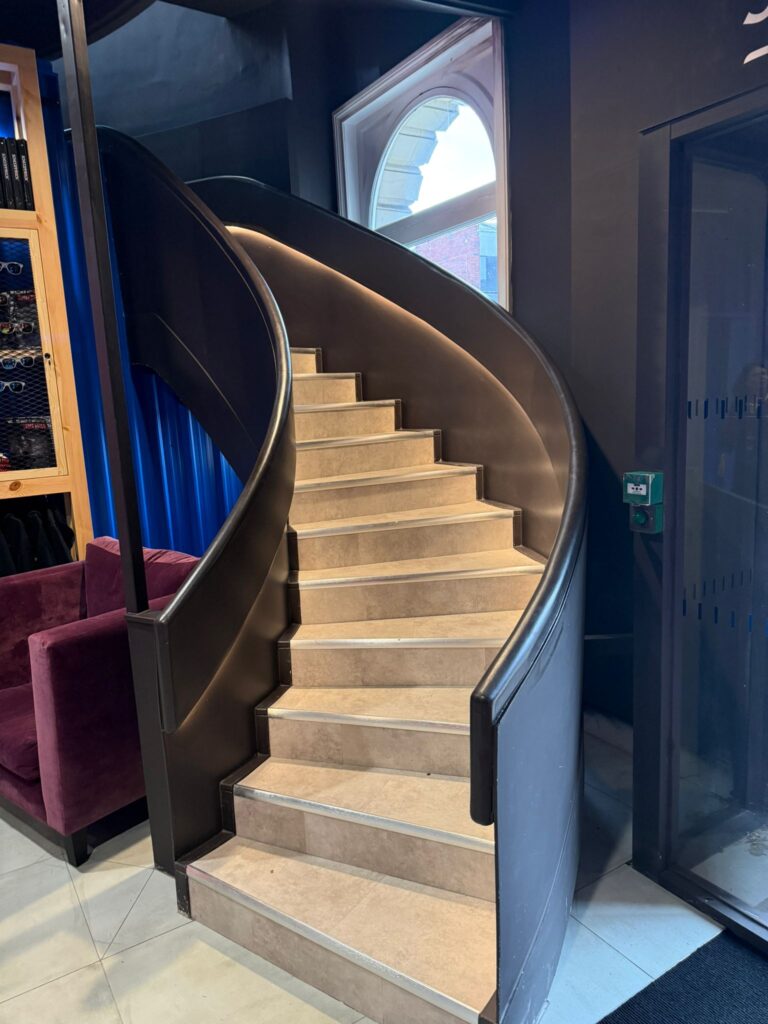
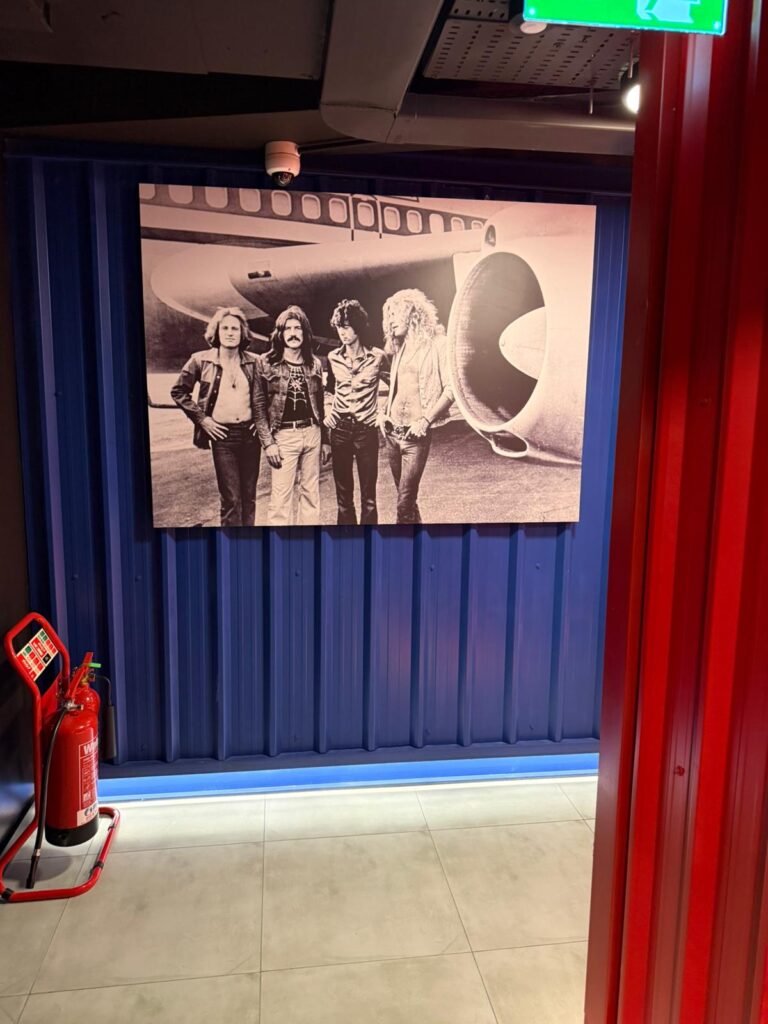


BHR delivered the full fit-out of the UK’s first School of Rock music school in Twickenham, including
- Full internal strip-out of all non-structural walls
- Construction of 15 individual themed music studios
- Specialist acoustic walls, ceilings, and doors
- Advanced soundproofing and vibration control systems
- Secondary glazing installation
- Full Mechanical & Electrical (M&E) package
- Fire & intruder alarm systems
- Plumbing and electrical installations
- Brand new HVAC systems
- Full Decoration and Tiling
- Bespoke joinery works
- Complete commercial fit-out to a high specification
Specialist Acoustic Construction at School of Rock Twickenham
Delivering a high-performance music education facility in a mixed-use building required far more than standard partitioning. At the School of Rock Twickenham project, BHR was tasked with designing and constructing specialist acoustic wall systems capable of containing high sound levels while protecting the residential apartments above and surrounding the premises.
This required a combination of advanced materials, specialist installation techniques, and meticulous attention to detail.
Sound behaves much like water – it will travel through any gap, joint, or weakness it can find. For a music school operating in a town-centre building with residential neighbours, standard wall systems were simply not sufficient.To meet strict sound insulation requirements, BHR worked closely with the project’s architect and design team to develop a bespoke acoustic wall solution that would:
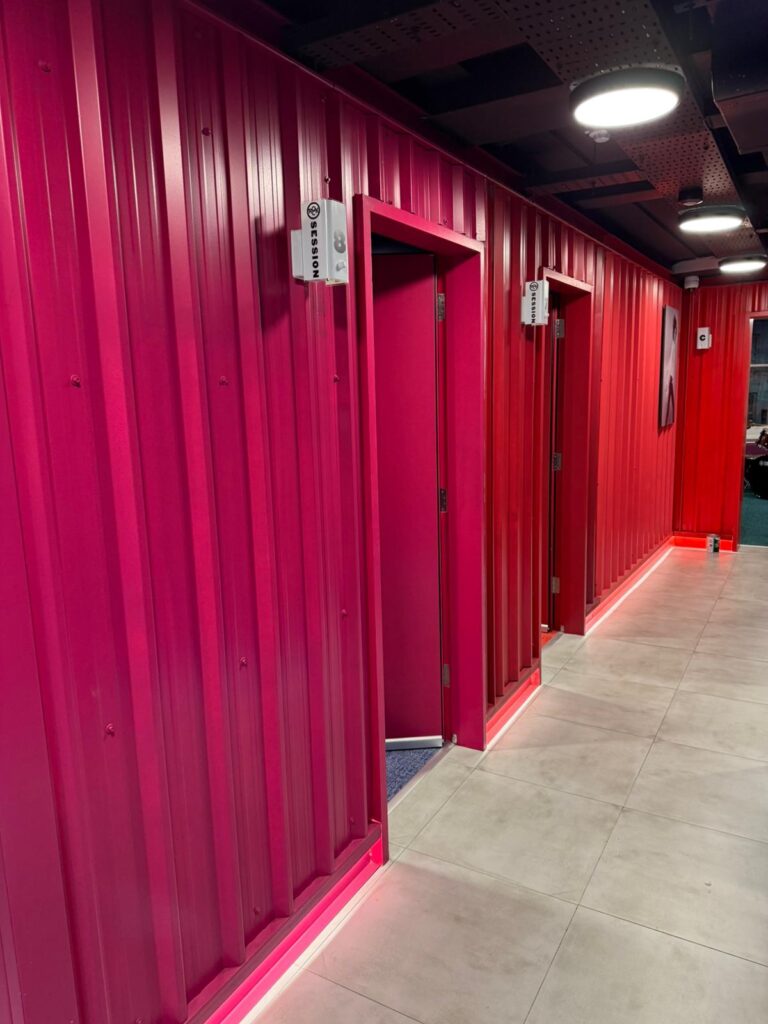
- Prevent sound transfer between studios
- Reduce vibration transmission through the structure
- Maintain airtight construction
- Comply with acoustic regulations
- Support long-term durability
- Maintains a comfortable and professional learning environmen
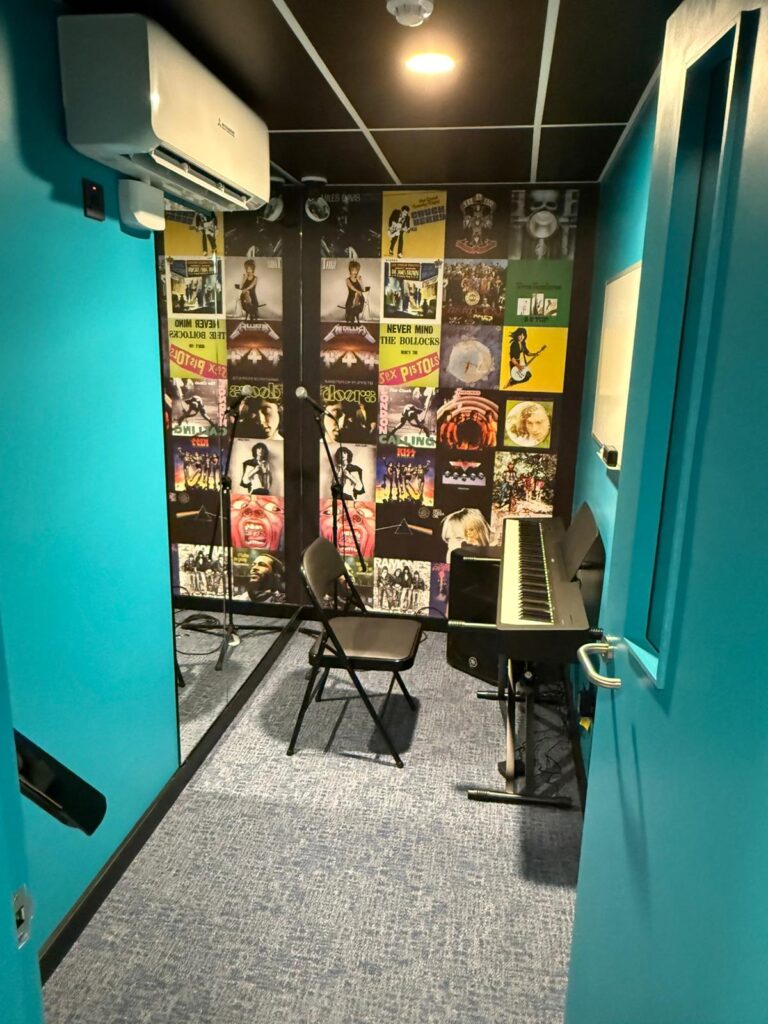
Partioning & Structural Isolation
The foundation of each acoustic wall began with carefully installed stud work. These frameworks were designed not only to support the wall structure, but also to minimise the transmission of vibration through the building.
Where required, floating wall systems were introduced to isolate the studio walls from the main structure. This reduced the direct transfer of sound and vibration, helping to contain noise within each individual room.

Layered Acoustic Materials
To achieve the required soundproofing performance, walls were constructed using a multi-layer system:
- Acoustic Soundblock boards for mass and sound reduction
- SoundRock acoustic insulation installed within the stud cavities
- Multiple layers of specialist acoustic plasterboard
- Fully sealed joints to prevent sound leakage
This combination created dense, high-performance acoustic barriers capable of absorbing and blocking sound across a wide range of frequencies.
Acoustic Sealants & Fixing Techniques
One of the most critical elements of the installation was controlling sound transmission through fixings and joints.
Even standard screws can transmit vibration if installed incorrectly. To prevent this:
- Acoustic silicone was used at key fixing points
- Sealants were applied to joints, edges, and service penetrations
- Floating wall connections were isolated from surrounding structures
- All gaps were sealed to maintain airtight construction
By using acoustic silicone rather than rigid fixings in certain areas, ScopaWorks reduced the risk of sound travelling through the wall system via mechanical vibration.

Attention to Detail
Every junction, joint, and fixing was treated as a potential sound path. Our team ensured:
- No unsealed gaps
- No rigid connections where isolation was required
- No compromised insulation zones
- Consistent acoustic performance across all studios
This level of detail was essential to delivering a professional music environment that met both client expectations and regulatory requirements.
A PRESTIGIOUS RECOMMENDATION
Our appointment came following a strong recommendation from a partner company who recognised our capability to deliver large-scale, technically complex refurbishments. Their endorsement connected us with the School of Rock team, who were seeking a contractor with the expertise, creativity, and precision required to transform a challenging site into a cutting-edge music education space. After a rigorous selection process, our approach, experience, and commitment to quality ensured we were chosen to lead this landmark development.
LIKE WHAT YOU SEE ? CONTACT US HERE TODAY